Welcome to the Cosmic Calendar!
This is a space for astronomy that looks into the night sky as a living language of rhythms and presences. "How big, how far, how fast, how much"… is just the beginning. We give astronomical facts meaning so we can better understand life above and between us.
— Sabrina Dalla Valle, Senior Cosmic Analyst
SPACE LESSONS II
OUTER SPACE
This is part two in our reflections upon the Artemis expedition. Last week we spoke of inner space; this week we look at that extreme experience of bodies suspended in outer space. What is it like to leave the gravity of Earth, a force that formed us? How does microgravity affect our responses to our environment? Can this show us something new about ourselves?
They felt that their bodies were absolutely without weight. Their arms, fully extended, no longer sought their sides. Their heads oscillated unsteadily on their shoulders. Their feet no longer rested on the floor. In their efforts to hold themselves straight, they looked like drunken men trying to maintain the perpendicular… men who, through the counteraction of attractive forces, could tell no difference between light substances and heavy substances, and who absolutely had no weight whatever themselves!
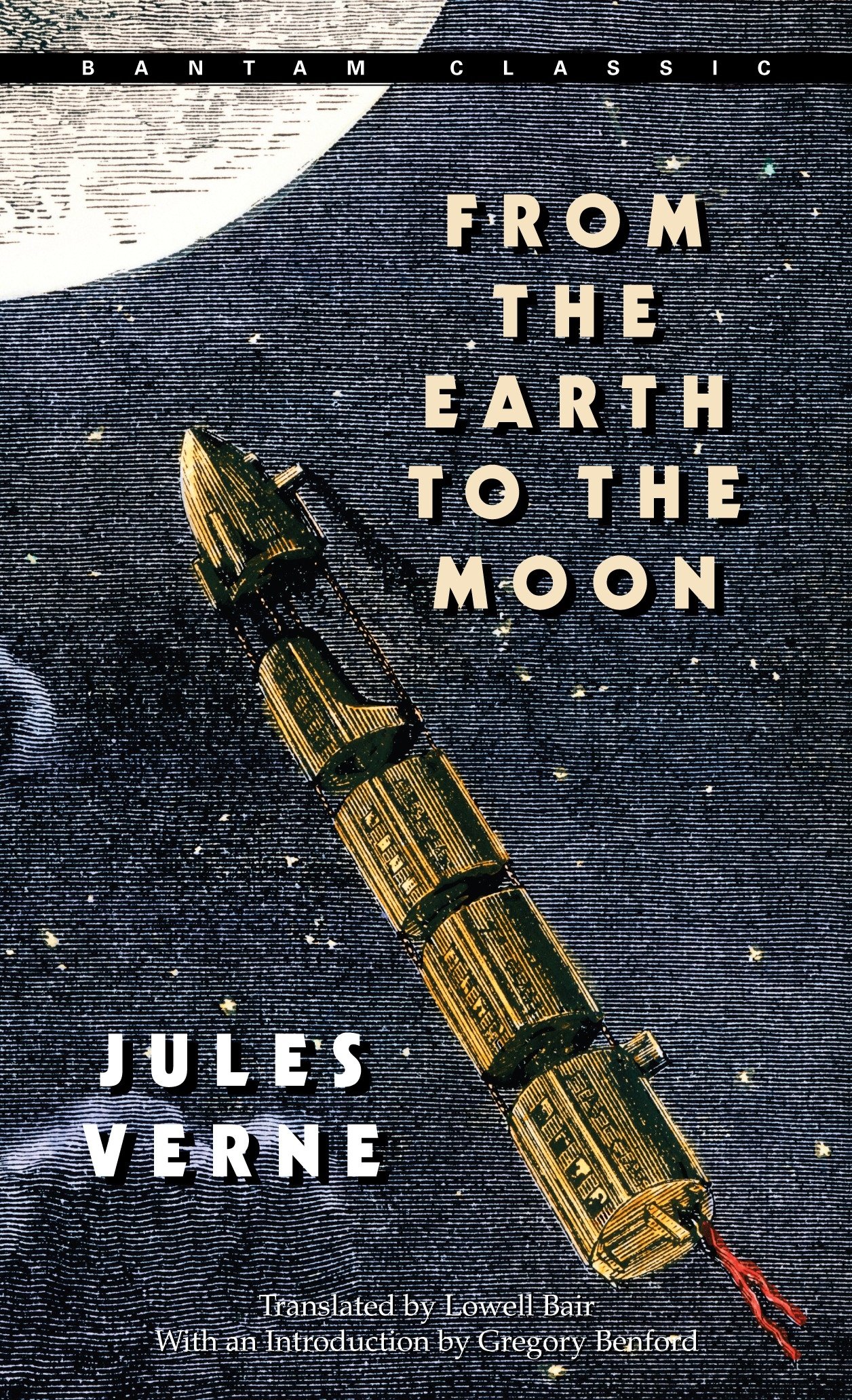
"From the Earth to the Moon" book cover
In 1870, the science fiction novelist Jules Verne could anticipate microgravity in space exploration. Was his vision of an outer world a reflection of some inner reality? What happens when our sense of time and space are squeed?
ALTERED PERCEPTION OF SPACE AND TIME
On Earth, the brain knows what is ‘up’ by way of gravity acting along the body's long axis through the gravity sensing organs. However, suspended in microgravity—in addition to complications with heart, bones and muscles—proprioception is challenged, making it difficult for the body to perceive its own spatial orientation. This is why astronauts often say there is no real “floor” or “ceiling.” They have to somehow recenter their relationship with the spatial field around them as they are gently floating with no stable horizon line to help them determine up from down. Luckily, with time their vestibular system within the inner ear can recalibrate in the absence of gravity.
But other things change. Previous studies of astronauts on board the International Space Station have shown that the mental representation of space, such as the perception of object size, distance, and depth, is altered in orbit. Time perception is also disrupted in space. Astronauts overestimate time; they feel a second, a minute, even a stretch of hours (metrics which are human conventions) last longer than it does, during long-duration spaceflight. What we may not realize on Earth is that the density and heaviness of our physicality requiring us to exert effort and experience fatigue provides physical cues to the brain that help us perceive time and space.
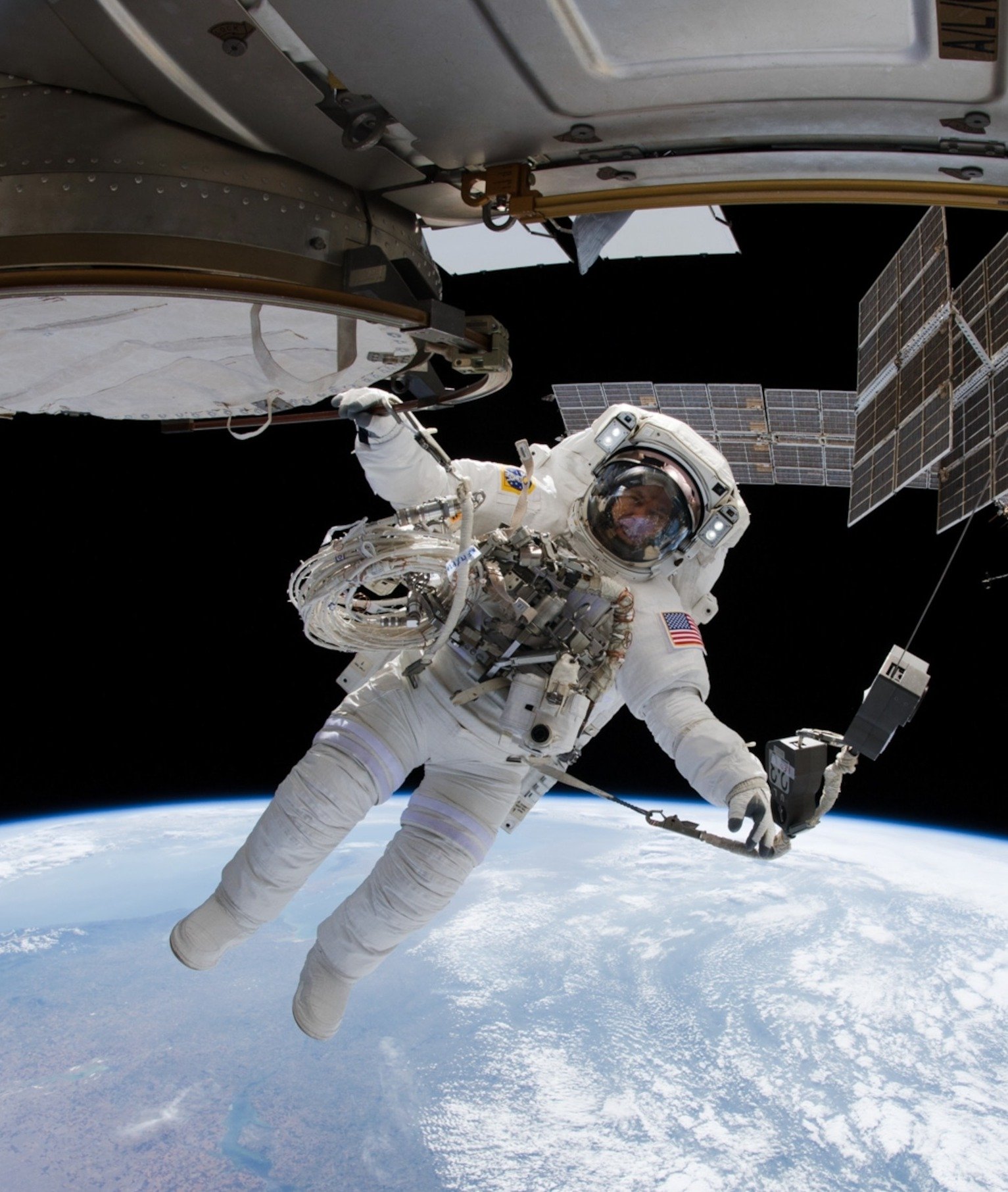
Astronaut in Space
SPACE AND TIME ARE INTERTWINED
What we’ve discovered so far is that astronauts’ altered perception of time duration is proportional to their altered sense of distance and size; one is a function of the other. There seems to be an overlapping perception of time and space. A century ago, Einstein revolutionized physics with his theory that space and time are intertwined. It has been proposed that representations of space and time both share the same nerve pathways through the cortical network located in the right parietal cortex of the brain. Our perception is tightly wired with our physicality, and limited by it. This helps me really appreciate the insights that ancient yogic traditions and mystics have into expanding awareness.
SCIENCE CAN LEARN FROM MEDITATION
In essence, the astronaut’s perception slows down their outer experience, and maybe also their internal experience. Research indicates it is likely that microgravity also changes our ‘intraception’, meaning our perception of our internal bodily sensations created from our heartbeat and breath.

Satoshi Furukawa aboard the ISS
The visionary philosopher, Rudolf Steiner, explored this terrain through a meditative practice guided by a key question. Do you become estranged in the psychic void of space because you lose the force of thought in the annihilating stream of time? In the non-visible reality of existence, we live in counter gravity. In this total absence of gravity we expand outward and fragment. Our thinking spreads out and separates from our feeling which separates from our sense of action—our willing. With the penetrating power of meditation, we learn to hold firm through our own inner forces, taking hold of ourselves on both sides of this reality. We do this by learning to separate time from space. It is a challenge that liberates us to make the spiritual element of life consciously our own. "If we are not things in space, then comprehending in space is the way in which the unrecognized us exists as Spirit."
Sources
Psychology Today; Science Direct; Nature.com; Rudolf Steiner archive