Welcome to the Cosmic Calendar!
This is a space for astronomy that looks into the night sky as a living language of rhythms and presences. "How big, how far, how fast, how much"… is just the beginning. We give astronomical facts meaning so we can better understand life above and between us.
— Sabrina Dalla Valle, Senior Cosmic Analyst
SPACE LESSONS I
INNER SPACE
This Cosmic Calendar entry is a little different. We are still gazing out into space and following moving bodies—but this time, we created them. How often do we get to look up at the moon and know a group of humans huddled in a tiny capsule are soaring around the dark side? If other life forms in our universe were observing the same thing—they would see a UFO with 4 aliens tucked within.
Following Artemis 2 made me wonder what the experience of ‘outer space’ might tell us about ‘inner space’, floating in a volatile atmosphere separated from our source of life. Could that push us psychologically into our own cosmic depths? I asked AI to show me quotes by astronauts speaking about the personal nuances of isolation. Here are a few in different contexts.
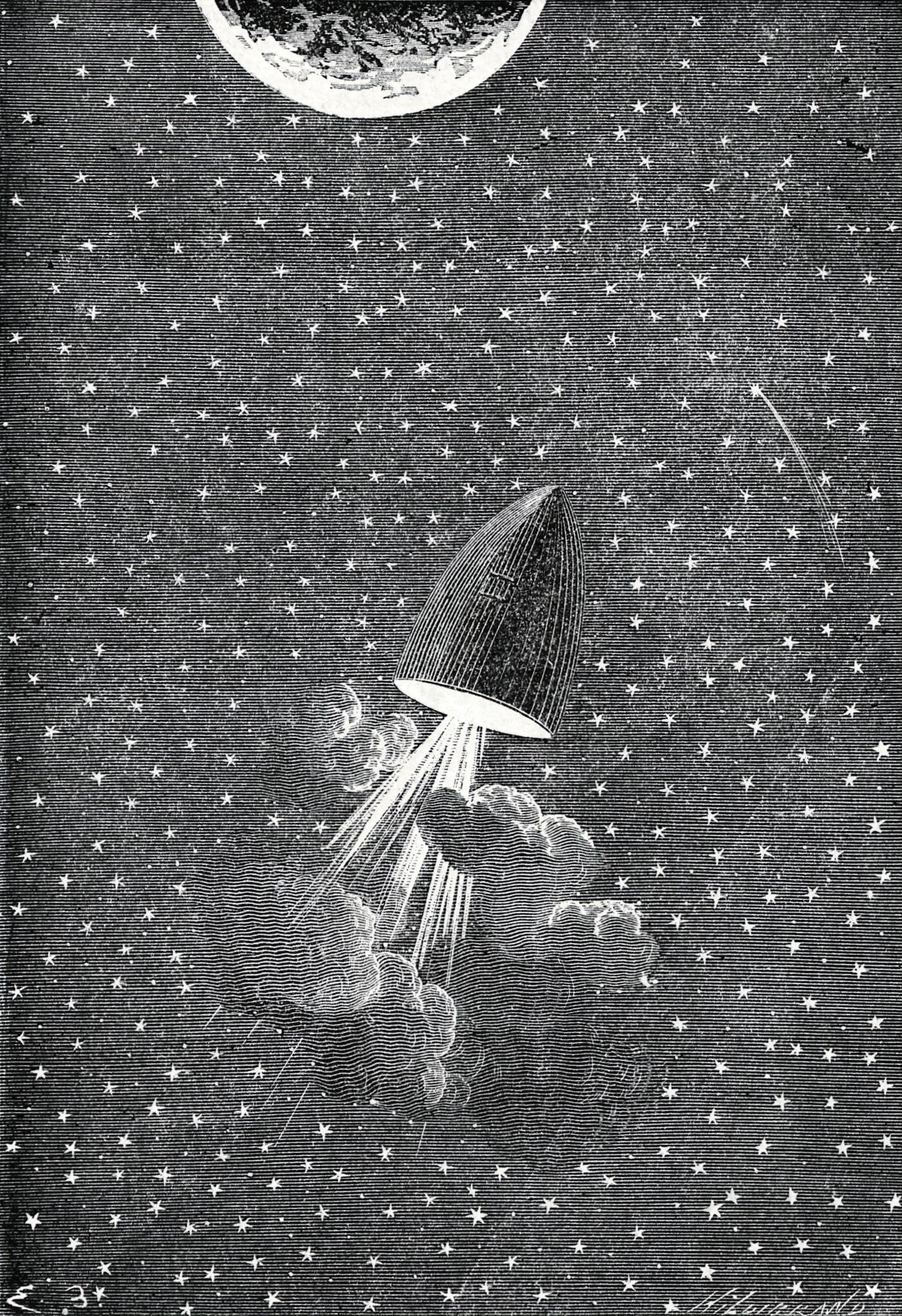
Around the Moon:Emile-Antoine Bayard
WHAT ASTRONAUTS SAY ABOUT BEING ALONE IN SPACE
Russell Schweichart piloted the Apollo 9 first crewed flight mission in 1969 sent out to perform in-space tests for the astronauts who would months later take the first walk on the Moon. While on an untethered spacewalk he said, "You are very much alone ...and it's a different kind of alone."
Michael Collins piloted the Apollo 11 in 1969 and stayed abord the capsule while his crewmates, Neil Armstrong and Buzz Aldrin, made the first surface landing. This is what Collins said while passing behind the moon with no communication, "I am alone, truly alone and absolutely isolated from all life. I am It."
In 1970, Jim Lovell flew with the Apollo 13 crew aimed for the third Moon landing. However, after communication drops and a power crisis en-route, the craft was redirected to loop around the Moon and return to Earth. Lovell commented, "It's awfully quiet up here…The vast loneliness is awe-inspiring".
Al Worden flew the Apollo 15 on its lunar mission in 1971. He was another pilot left behind in the capsule while his crewmates departed to land on the Moon—this time for three days. He orbited the Moon 74 times. He said, "There's a thing about being alone and there's a thing about being lonely and they're two different things… I was the most isolated human being ever".
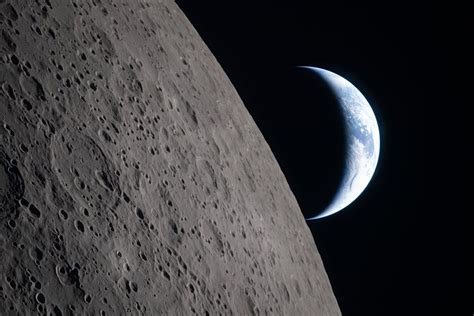
The Moon and Earth from Artemis 2
In 1972, Ron Evans was the pilot for Apollo 17, the last crewed mission to the Moon. He was left alone on board the ship for six days (with 5 mice) while the others surveyed the moon. He orbited the Moon 75 times, "It's a lonely feeling, but at the same time you know you are not really alone".
Chris Hadfield flew two Space Shuttle missions and served as commander of the International Space Station (ISS). You may read more about his thoughts in his published memoir. "You're in this incredibly dangerous place completely dependent on your spaceship to stay alive... You are permanently on the edge of death."
Peggy Whitson, a biochemist researcher and astronaut working for Axiom Space accumulated a total of 695 days in space, more than any other American or woman. She says, "You have to be comfortable being away from everything you know."
Christina Koch, an astronaut who spent 328 consecutive days at the ISS, and was one of the four astronauts on the recent Artemis 2 lunar orbit mission said, "Space felt vast and isolating, yet made Earth feel more connected".
SCIENCE CAN LEARN FROM MEDITATION
We find here a wide range of experiences with solitude. It spans from being on the edge of death at every moment, to a different kind of alone so isolated that you are 'It'—a sense that you are the only thing that exists. Where is the solidity that once sustained you? Then, you learn to be comfortable with ‘this’. What does it take to free yourself from that feeling of being surrounded by vast emptiness—the abyss? Is there new territory here to discover?
Artemis 2 logo
Finding the fundamental ground of our existence is the practice of many forms of meditation.
As we discover, our existence goes deeper than the ground beneath our feet. We find our rock at the bottom of our connection to our self-honesty, or what we bravely know from experience to be true despite our ego’s fierce promotion of its own face.
Going further along this spectrum of astronaut solitude we find that being alone and being lonely are different things. Being alone is deeper, more interesting and powerful, setting us off into another inner dimension where we can get even more connected to life and what is ‘awe- inspiring. Being alone does not mean the absence of other presences. It gives us the quiet to trace our own thoughts in inner space—which is different. You don’t need time to move from place to place; you just ‘spring through it’.
When we focus entirely on being the observer, this “unfolds a particular life and inner agility of its own… [We actually] live and weave within the thoughts themselves…The thought becomes an inner structure…It is as if one were in the position of being able to produce a real being within oneself” (R. Steiner).
The feeling of isolation builds inner strength needed for spiritual perception, as the physical world can feel crushing. A good meditative practice will open the doors into your unconscious where you find the true ground and strength of your existence.